
Menu
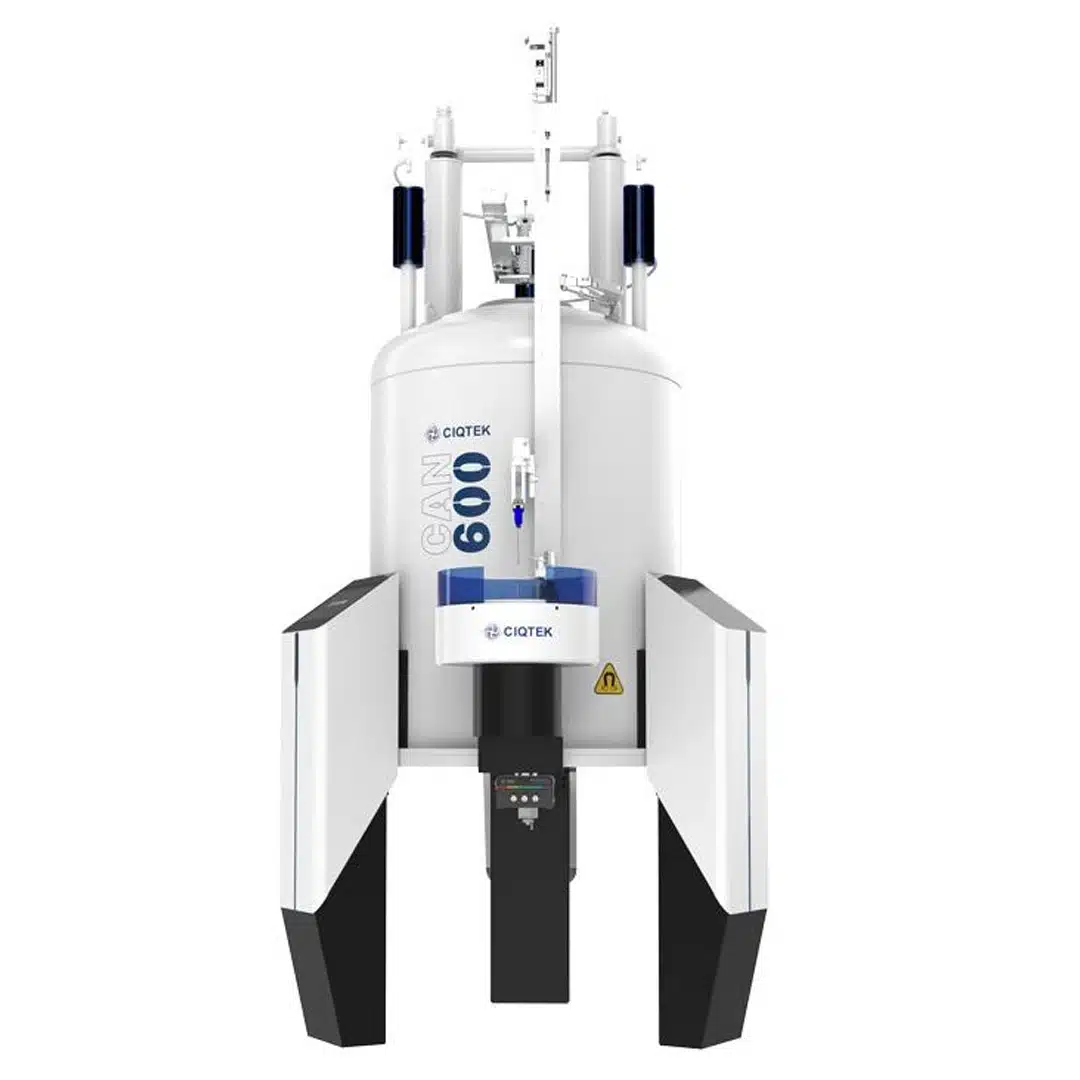
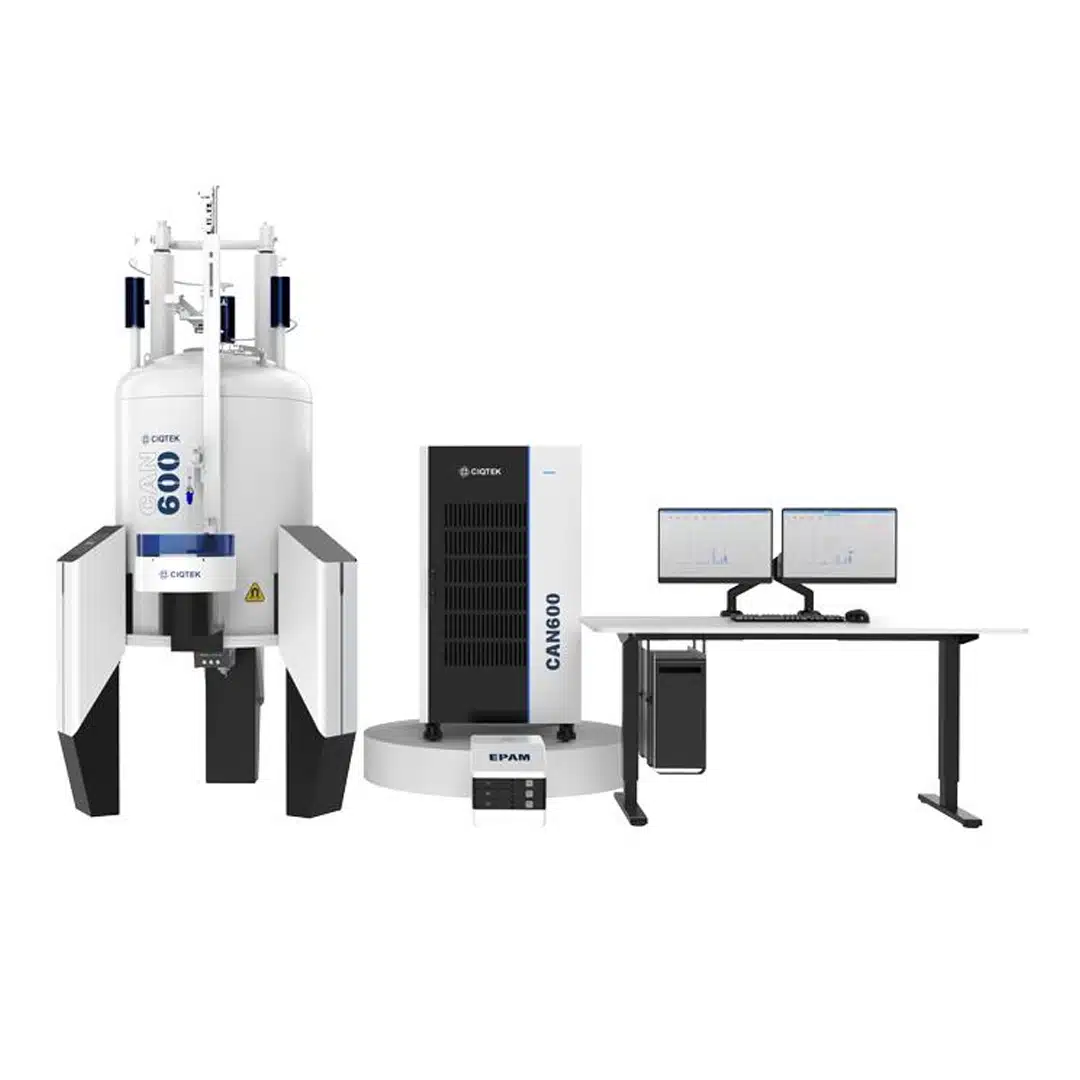
The CAN600 is a next-generation liquid-state nuclear magnetic resonance (NMR) spectrometer designed for high-precision molecular analysis. The system is equipped with an ultra-shielded, ultra-homogeneous 600 MHz superconducting magnet, a modular distributed system architecture, and high-sensitivity probes with automatic tuning.
The instrument combines high-performance hardware with intelligent control software to provide a reliable and user-friendly platform for NMR research. Its architecture supports rapid tuning and shimming, helping reduce experiment setup time and improving overall laboratory efficiency.
High-performance magnet and RF system
600 MHz superconducting magnet with ultra-high homogeneity, ultra-shielding, and low energy consumption
Advanced distributed cabinet architecture with expandable RF system
Supports up to 8 independent transceiver RF channels
Timing resolution ≤ 4 ns and frequency resolution ≤ 0.0005 Hz
High-sensitivity probes
Automatic tuning probe designed for high sensitivity
Supports ¹H→¹⁹F and ¹⁹F→¹H decoupling experiments
Fast tuning capability to accelerate experiment preparation
Intelligent system control
Integrated touchscreen control interface for monitoring instrument status and managing samples
Allows instrument operation without a PC, keyboard, or mouse
Smart software supports remote spectrometer power control and real-time monitoring of experiments and system status
Efficient experiment setup
Rapid automatic shimming and tuning supported by the system architecture
Automatic sample changer with 72 sample positions
Fast sample exchange with bi-directional rotation of the sample reservoir
Expandable platform
Modular distributed design enables flexible system expansion and future upgrades
Independent transceiver channels allow multi-receiver NMR experiments
The CAN600 integrates intelligent control functions to simplify NMR management. A touchscreen interface provides direct access to system status and sample control, while remote monitoring allows researchers to supervise experiments and instrument performance in real time.
Chemistry
Investigation of chemical reaction kinetics
Determination of catalyst structures
Identification of intermediates in multi-step synthesis
Screening of combinatorial compound libraries
Identification of unknown compounds
Environmental science
Detection of heavy metals and radionuclides
Analysis of environmental phosphorus forms
Study of soil organic matter composition and stability
Atmospheric aerosol system analysis
Energy research
Study of sodium- and lithium-battery electrolyte systems
Analysis of battery electrode materials
Composition analysis of fuels and lubricants
Research into hydrogen-energy photoelectrocatalysis
Food science
Fatty acid composition analysis
Food authenticity and adulteration detection
Origin identification of agricultural products
Detection of food additives
Biological research
Structural studies of bacterial RNA
Investigation of protein complex interactions
Structural analysis of membrane proteins and fibrils
Analysis of cellular biomolecular complexes and metabolites
Medical research
Structural analysis of disease-related target proteins
Virus life-cycle studies and inhibition research
Investigation of cancer cell development and inhibition
Drug mechanism studies and antibody research
High-throughput drug screening

